The Manchester Limb Reconstruction Unit is a tertiary specialist service embedded within Manchester Foundation Trust at Manchester Royal Infirmary. We manage the most challenging presentations in trauma and orthopaedics — cases where standard treatment has failed, or where complexity demands a dedicated reconstructive approach from the outset.
Our clinical remit spans bone infection, fracture-related complications, multiplanar deformity, limb length discrepancy, and post-traumatic reconstruction. We work alongside plastic surgery, vascular, and infectious disease colleagues to deliver comprehensive limb salvage pathways.
Referrals are welcome from across the North West and nationally. We offer direct consultant-to-consultant access — early discussion can significantly change the trajectory of a complex case.
i.
Limb Salvage
Preserving threatened limbs through staged surgical planning, infection control, and biological reconstruction.
ii.
Deformity Correction
Multiplanar deformity analysis and correction using hexapod and circular frame systems.
iii.
Bone Infection
Chronic osteomyelitis and fracture-related infection managed with evidence-based surgical and antimicrobial protocols.
iv.
Non-Union & Failed Fixation
Revision surgery and biological augmentation for fractures that have failed to heal after previous treatment.
Conditions Treated
When complexity demands a specialist.
We accept referrals for a broad range of limb-threatening and functionally significant conditions.
Infection
Chronic Osteomyelitis
Long-standing bone infection requiring radical debridement, dead space management, and reconstruction.
Infection
Fracture-Related Infection
Post-operative or post-traumatic infection complicating fracture fixation, including implant-associated biofilm.
Healing
Non-Union
Fractures failing to unite despite prior treatment, requiring biological and mechanical optimisation.
Reconstruction
Mal-Union
Healed fractures in poor position causing pain, instability, or functional deficit requiring corrective osteotomy.
Deformity
Limb Length Discrepancy
Symptomatic leg length inequality managed by gradual distraction osteogenesis or acute correction.
Deformity
Multiplanar Deformity
Complex angular, rotational and translational deformities of the tibia and femur.
Trauma
Open Fractures
High-energy open injuries requiring coordinated ortho-plastic management and staged reconstruction.
Bone Loss
Segmental Bone Loss
Substantial skeletal defects managed by bone transport, induced membrane technique, or bone grafting.
Salvage
Peri-Articular Complications
Complex fractures around joints with malunion, non-union or post-traumatic arthrosis requiring reconstruction.
Our Techniques
Biological engineering for bone.
We employ the full toolkit of modern limb reconstruction — from Ilizarov methodology to contemporary intramedullary solutions.
i.
Circular & Hexapod External Fixation
Ilizarov ring frames and computer-assisted hexapod systems for deformity correction, bone transport, and complex fracture management.
ii.
Transverse Tibial Cortical Transport (TTT)
A specialised bone transport technique harnessing distraction osteogenesis to promote vascularisation in ischaemic or infected tissue beds. One of very few centres in Europe.
iii.
Induced Membrane Technique (Masquelet)
Two-stage procedure creating a biological membrane around a cement spacer, followed by autologous bone grafting — ideal for segmental defects.
iv.
Intramedullary Nail Techniques
Reamed exchange nailing, augmentative nailing, and antibiotic-coated nails for non-union and fracture-related infection management.
v.
Biological Augmentation
Platelet-rich plasma, demineralised bone matrix, and autologous bone graft to enhance healing biology in challenging non-unions.
vi.
Corrective Osteotomy
Acute and gradual correction of mal-united fractures and congenital deformities, planned with digital deformity analysis software.
TTT Service
Manchester is one of very few European centres offering Transverse Cortical Tibial Transport for limb salvage, and the only UK centre using TTT to treat vascular ulceration and claudication pain — delivered through a dedicated multi-disciplinary pathway with the Manchester vascular team.
For Patients
Preparing for your frame journey.
Clear, practical information to help you and the people supporting you through circular frame treatment — from caring for your pin sites at home to knowing what to expect at every stage.
Watch · Pin Site Care
The weekly pin site care routine
A step-by-step demonstration of cleaning and re-dressing your pin sites at home. Clean once a week with chlorhexidine, keep the sites clean and dry between cleans, and shower only immediately after cleaning.
Read · Patient Guide
Circular Frame Treatment
A complete guide for patients, families and carers — covering frame types, preparing for surgery, pin site care, common problems, follow-up and frame removal.
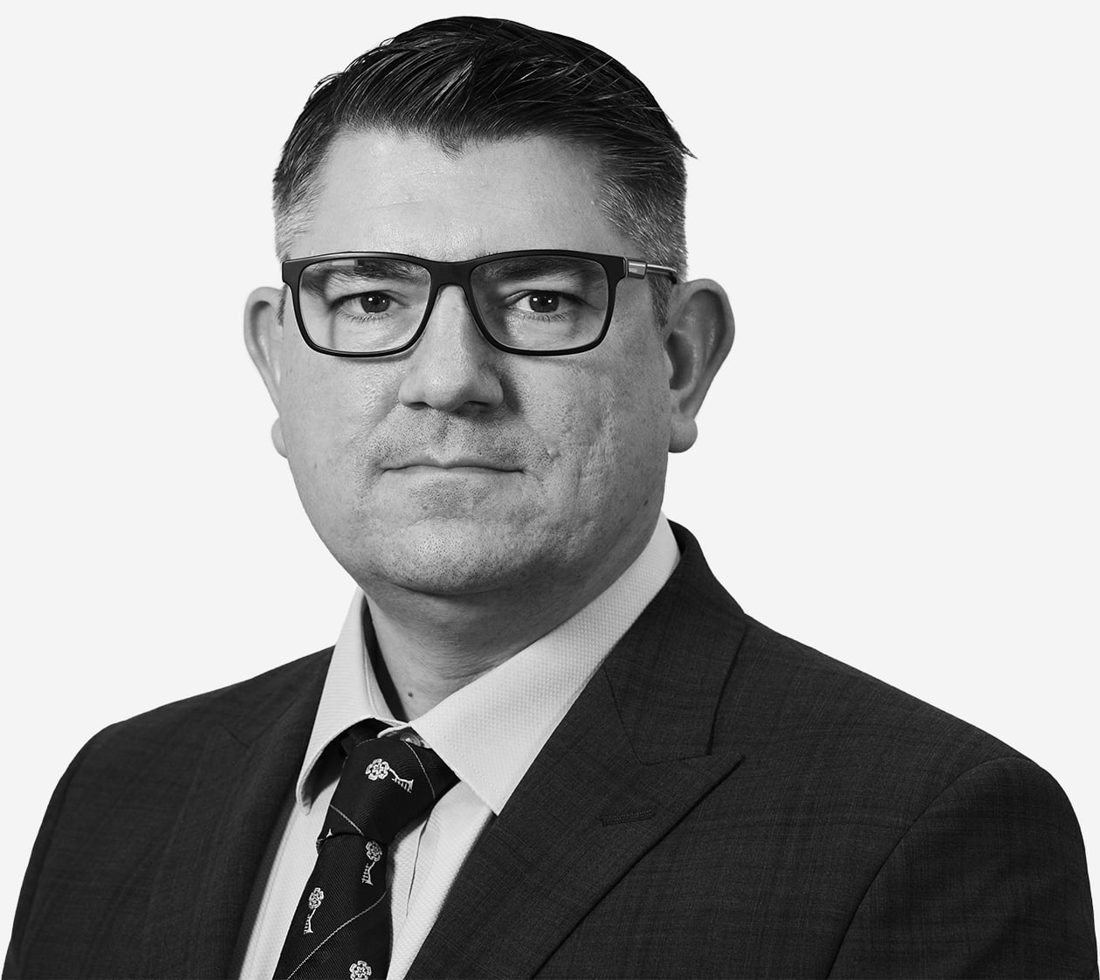
Four fellowship-trained consultants. One specialist unit.
Consultant Surgeon · Unit Lead
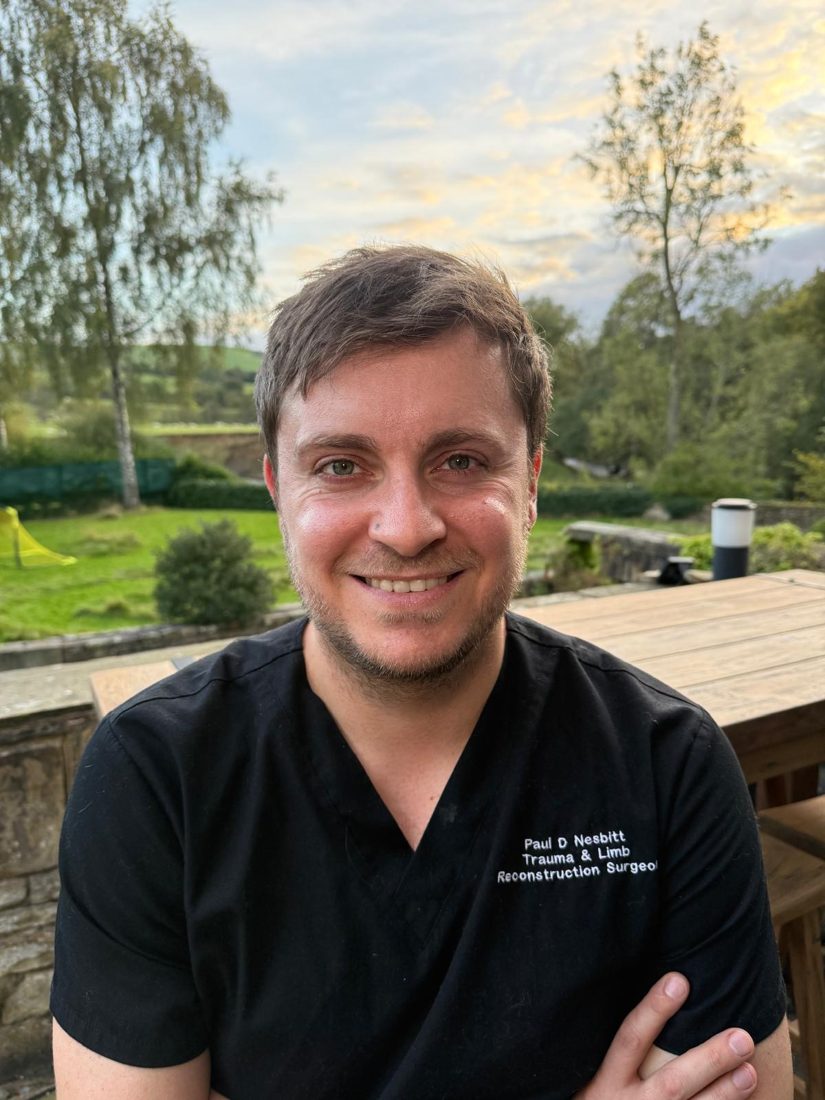
Mr Paul Nesbitt
MBChB · FRCS (Tr & Orth)
Leads the unit and the TTT service. Governance Lead at Manchester Royal Infirmary, with peer-reviewed publications and textbook contributions in limb reconstruction.
Fellowship-trained with broad expertise in external fixation, deformity correction, and complex bone and soft tissue pathology.
DeformityExternal Fixation
Consultant Surgeon
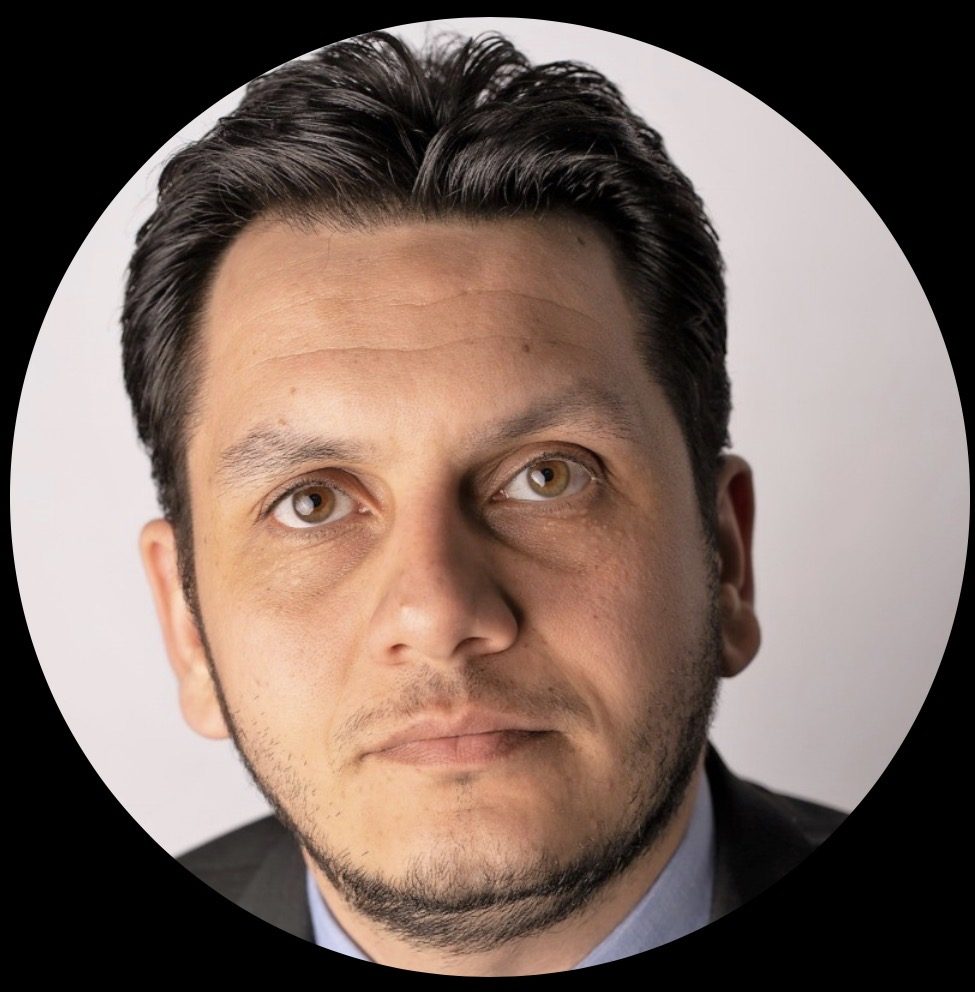
Mr William Chellam
FRCS (Tr & Orth)
Fellowship-trained, specialising in complex fracture care, non-union, and limb salvage using frame-based and intramedullary techniques.
Non-UnionLimb Salvage
Consultant Surgeon
Ms Sadia Afzal
FRCS (Tr & Orth)
Fellowship-trained with expertise in bone infection, deformity correction, and post-traumatic reconstruction using circular frame techniques.
Bone InfectionCircular Frames
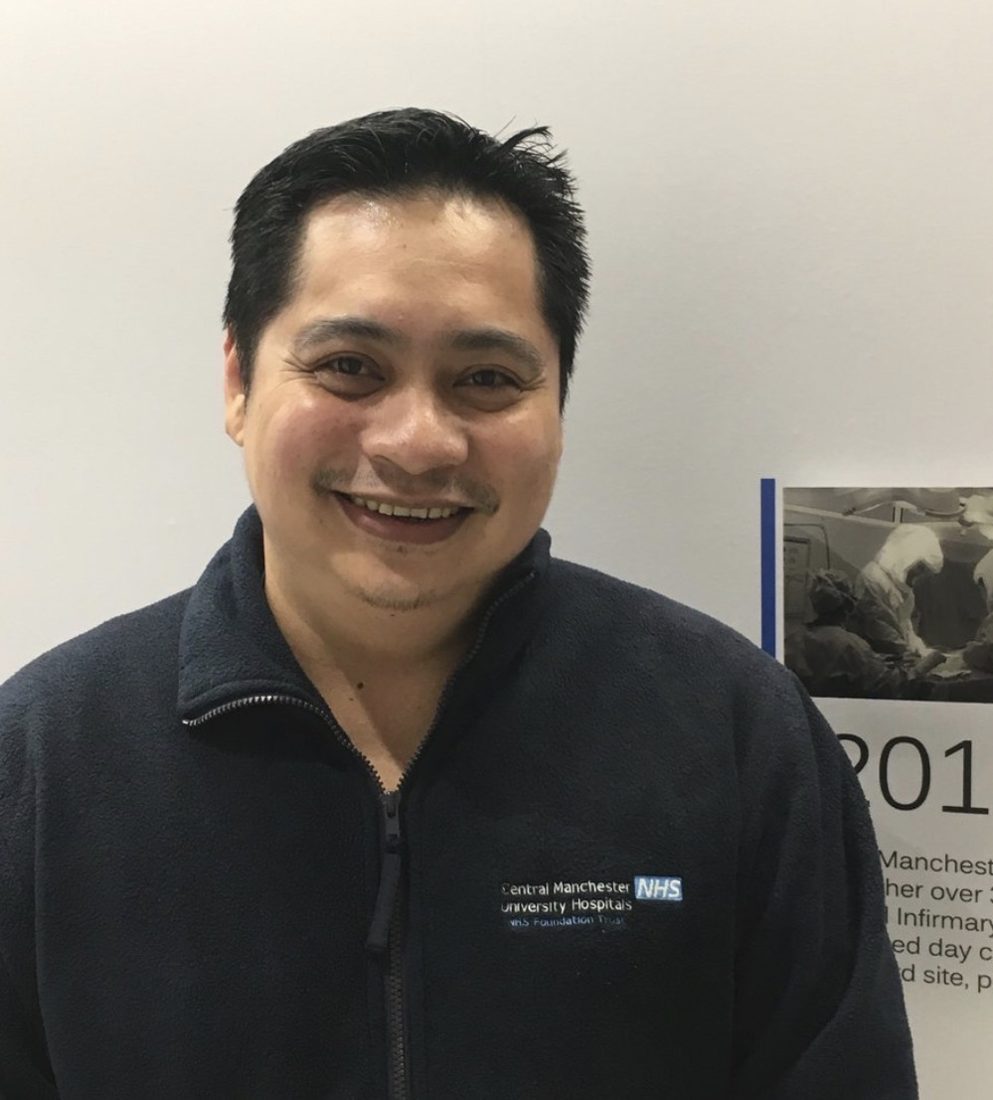
Specialist Nurse · Frames & Limb Reconstruction
Rex Turita
RN · Specialist Limb Reconstruction Nurse
Dedicated specialist nurse providing expert clinical support across the patient pathway — from frame application and wire-site management through to discharge and community liaison.
Manchester Foundation Trust
MFT is one of the largest NHS foundation trusts in England, anchored by Manchester Royal Infirmary — a Major Trauma Centre and tertiary referral hub for the Greater Manchester region and North West England.
The Limb Reconstruction Unit operates within the Trauma and Orthopaedic directorate, with access to specialist MDT input from plastic surgery, vascular, microbiology, and infectious disease.
LocationManchester Royal Infirmary, Oxford Road, Manchester
StatusMajor Trauma Centre · Tertiary Referral
MDTOrthopaedics · Plastic Surgery · Vascular · Microbiology · ID
TeachingNW Deanery Training Unit · University of Manchester affiliated
Where We Are
Based in Manchester, serving the region.
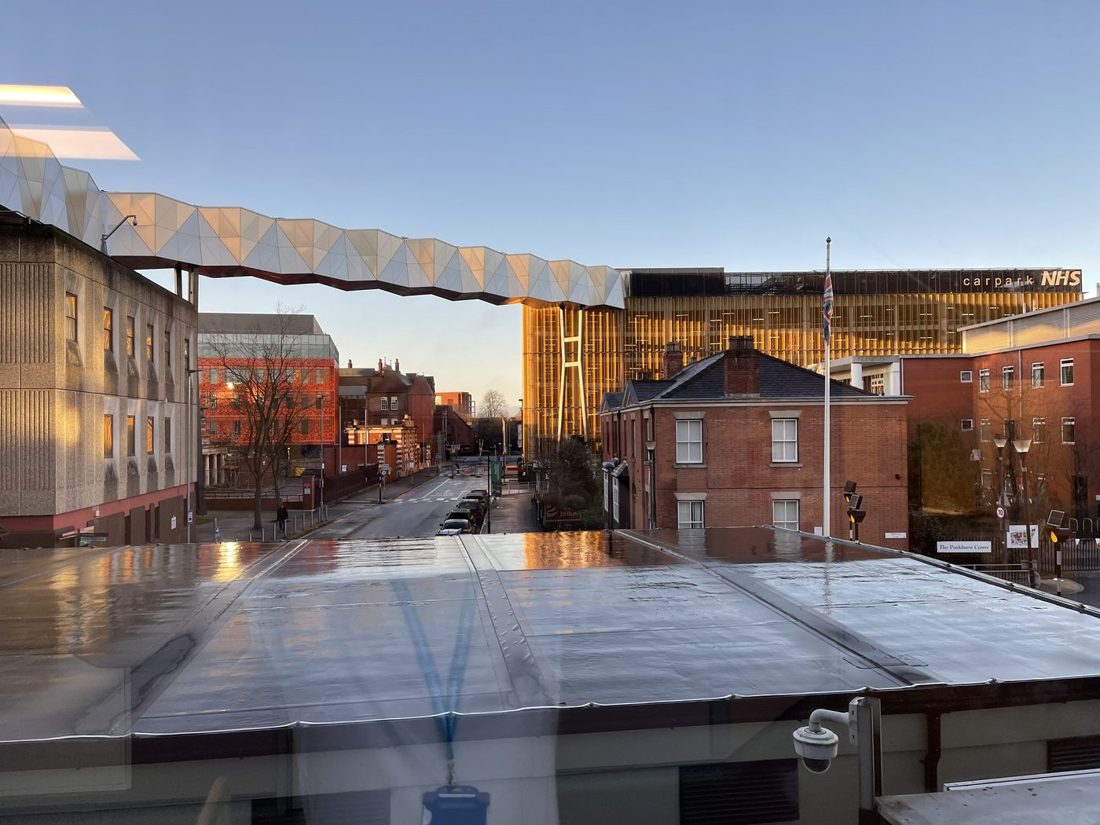
Manchester Royal Infirmary
The unit operates from Manchester Royal Infirmary, part of Manchester University NHS Foundation Trust on Oxford Road — easily accessible by public transport and with on-site parking.
Manchester Royal Infirmary
Oxford Road
Manchester
M13 9WL
Oxford Road train and Metrolink connections
Buses serving Oxford Road corridor from city centre
Car parking available on site
Adjacent to Manchester University campus
Manchester Royal Infirmary · Oxford Road · M13 9WL
Referrals
Refer a patient to the reconstruction unit.
We welcome direct consultant-to-consultant referrals. Early discussion is always encouraged — a brief call can clarify the right pathway and timing for your patient.
Direct Contact
Consultant to Consultant
Call or email directly to discuss a case. No referral letter required for initial discussion.
Formal Referral
NHS e-Referral
Formal referrals accepted via NHS e-Referral Service. Please include imaging and operative records where available.
Emergencies
Acute & Urgent Cases
For acute limb-threatening presentations, contact MRI switchboard and ask for the on-call orthopaedic team.
Referral proforma
Open the unit's fillable referral proforma, complete it, and return it by NHS e-Referral or nhs.net secure email to limbrecon@mft.nhs.uk.